Do I need a mission or a vision statement?

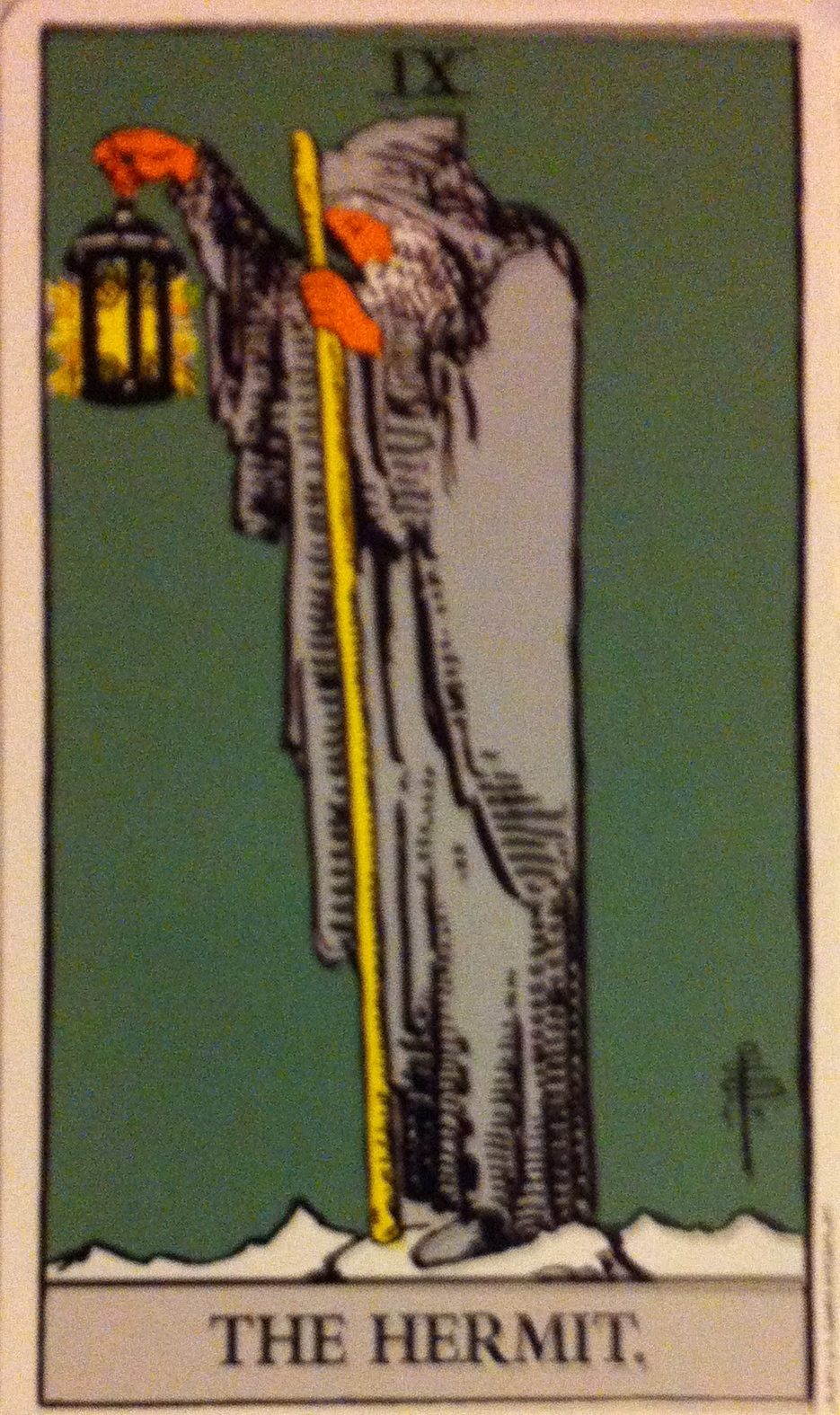
The Hermit

My answer is this: It couldn’t hurt.

“The will to win, the desire to succeed, the urge to reach your full potential – these are the keys that will unlock the door to personal excellence.” Confucius

“You are never too old to set another goal or to dream a new dream.” C. S. Lewis

“What you get by achieving your goals is not as important as what you become by achieving your goals.” Henry David Thoreau

Some of us are journey people and some of us are destination people. Anyone can benefit from a vision or mission statement. I realize that personal vision and mission statements are popular in self-help literature today, but that doesn’t mean that they aren’t useful.

The end of the Gregorian year of 2014 is coming soon; the winter solstice in the northern hemisphere is near, as is the new year of 2015 and the celebrations connected with these events.

It’s time to start thinking about accomplishments, achievements and new beginnings.

A mission can define your life-purpose. A vision can be all about what you want out of life. You can even break that down into what you want to happen during 2015. How cool is that?

I truly believe that a mission or vision can help people keep themselves on track. It doesn’t stop us from smelling the roses along the way. Tarot can help with that part too, as a daily or weekly practice.

Tarot helps me check whether I’m on-course with my life journey.  It’s sort of like finding mile-markers that identify new chapters or phases of life.  I can then check alignment with my mission and vision.

Now is a good time to start thinking and taking stock. Why wait until New Year’s Eve?

As I look back on 2013 and 2014, all I can say is, “What a trip!” I got off the path a bit, but I’m getting back on.  It’s a good feeling.

In my next post I’ll share some techniques for using tarot in mission and vision work.
The social intelligence of tarot

A component of Daniel Goleman’s description of emotional intelligence involves social skills – the skills we use in communicating with others. This includes the capacity to relate to others on several levels, especially group dynamics.

Emotional intelligence self-awareness skills help me identify what I’m feeling and how I’m reacting to others. Can I relate to others inclusively? Can I relate to groups in a way that inspires people to include me? Do I feel included?

Do I see patterns of behavior within the group?

For instance, do people relate to others equally? Do people seem to regard someone as a formal or informal group leader? Have cliques formed within the group?

Does someone in the group seem to want to be the focus of attention? How would I relate to that? Am I simply aware of it, or do I rush to judge it? Do I think of ways to navigate this dynamic? Developing the social skills to “read” group behavior can be an important skill in work and personal relationships.

Tarot is a tremendous help with this skill. There are certain cards that remind me to develop and use social skills:

IMG_0826


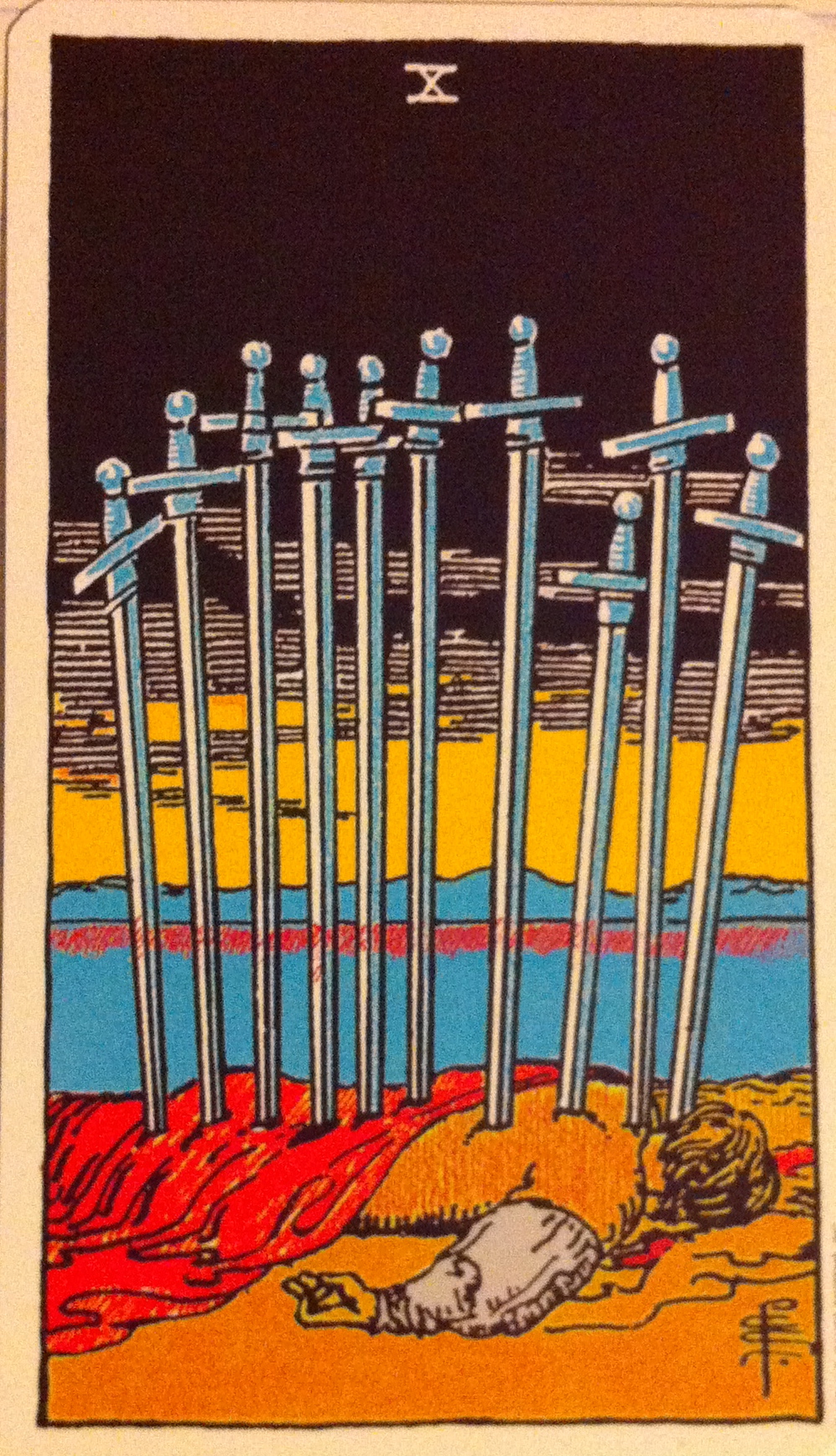
10 of Swords – Feeling attacked, defeated, picked on, a scapegoat, no one helping. Is that really what happened or am I feeling like a victim because I’ve decided that I am one? Am I taking things too personally and being reactive?

Do I need to keep my chin up and ignore slights from others? This number 10 is the end of a cycle. A chapter could be ending and new one beginning.  Maybe I need to just stop the drama.


IMG_0844

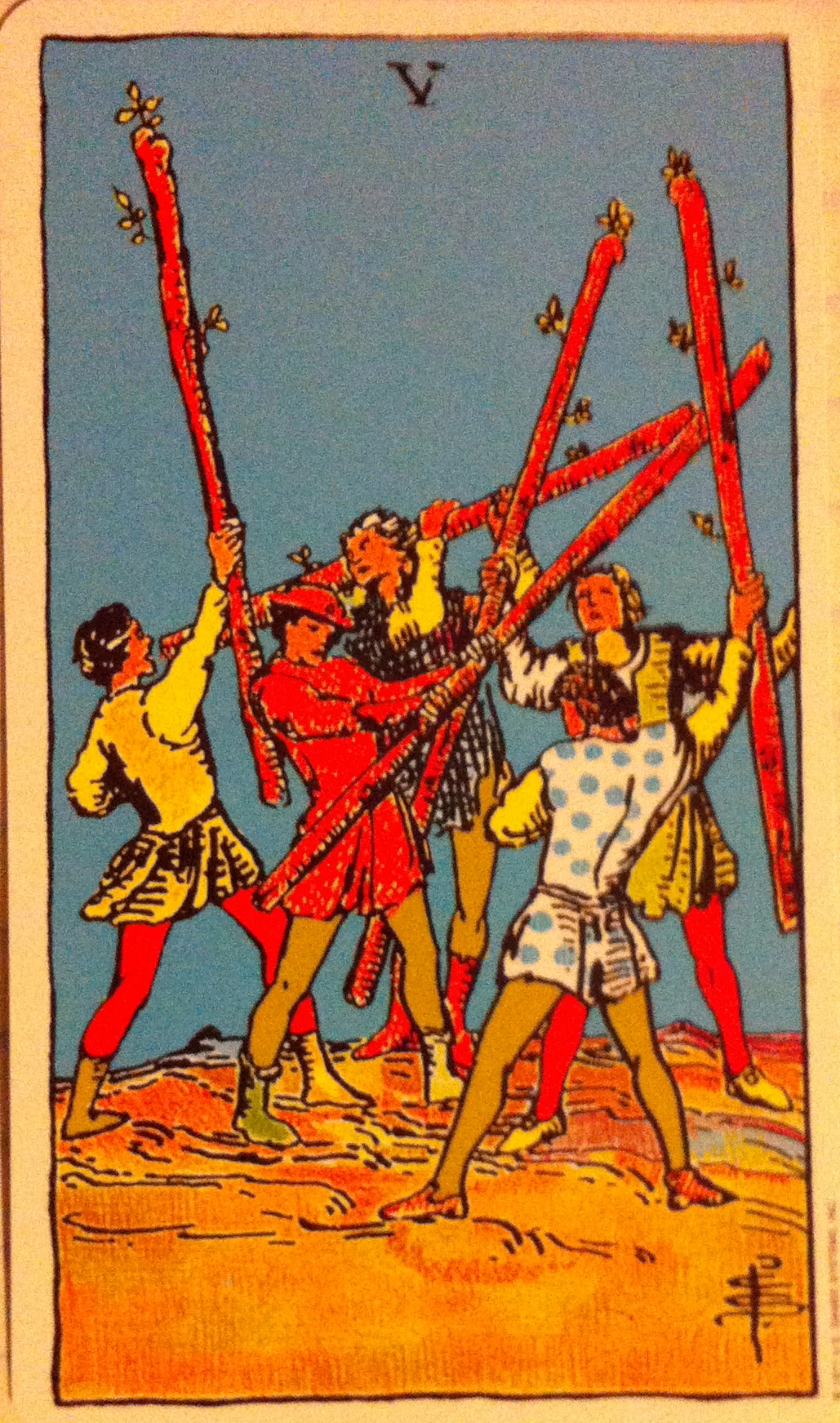
5 of Wands – What are these guys doing? Notice they look like they might be in conflict, but they aren’t hurting each other – only sparring or playing with their wands high in the air. Is the person dressed in red the leader? There is definite interaction going on here. We just don’t know exactly what it is. Number 5 is the middle of a cycle or chapter. Go with it.


IMG_0831

5 of Swords – Some people are walking away defeated.  One guy has a smirk on his face as he picks up the swords and takes them away. The number 5 tells me that the first part of something is over – maybe a conflict? Am I the guy smirking or  am I one of the people walking away? Did this  person deserve to  win or is it all a mind game?

IMG_0845


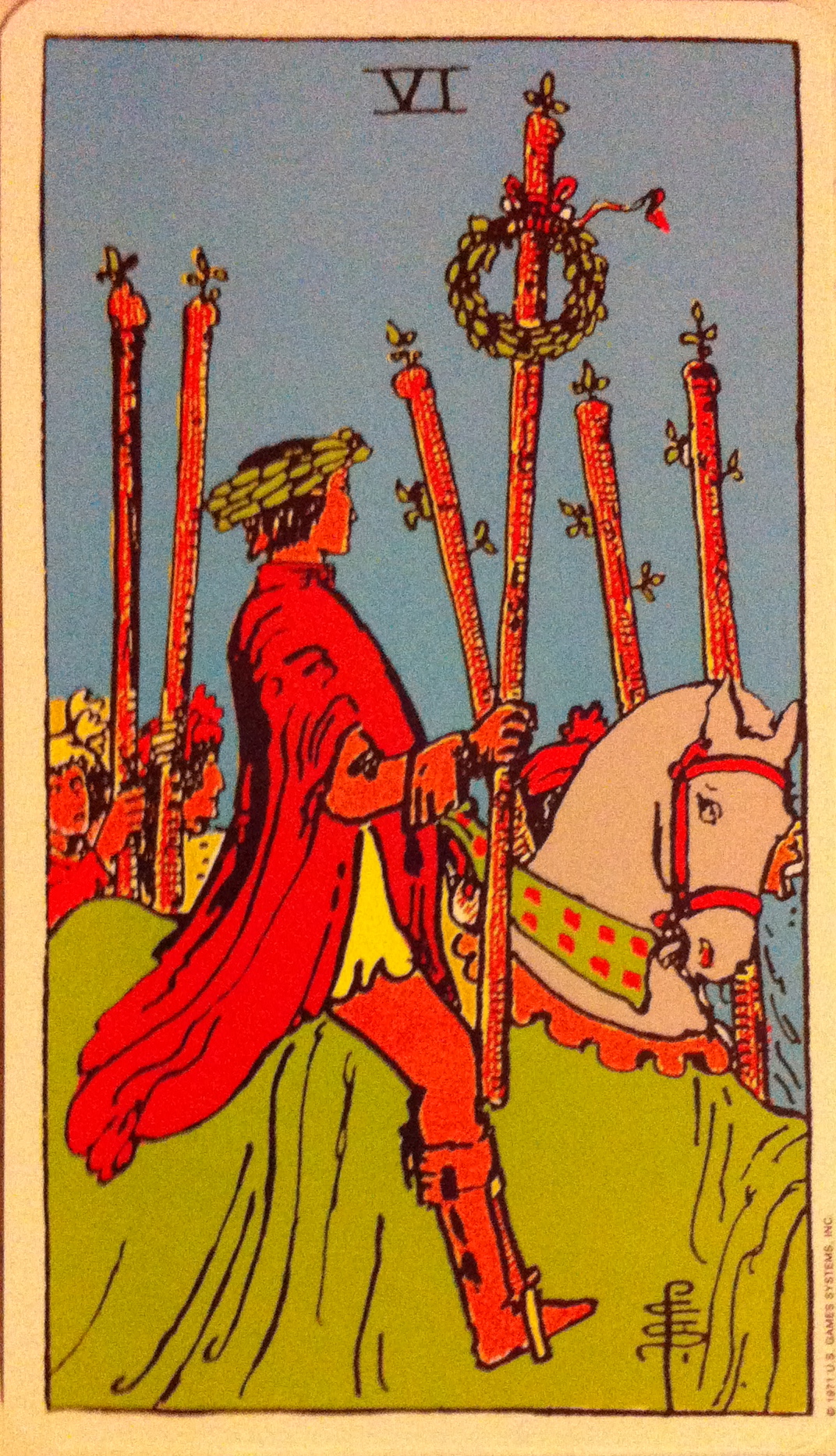
6 of Wands – I am part of a celebration or people are celebrating me. Everyone seems happy about something. My horse glances at me with a knowing expression. Is he telling me to get over myself? Sometimes animals are smarter than people. The number 6 says I’m in the middle of something but well on my way.


IMG_0797


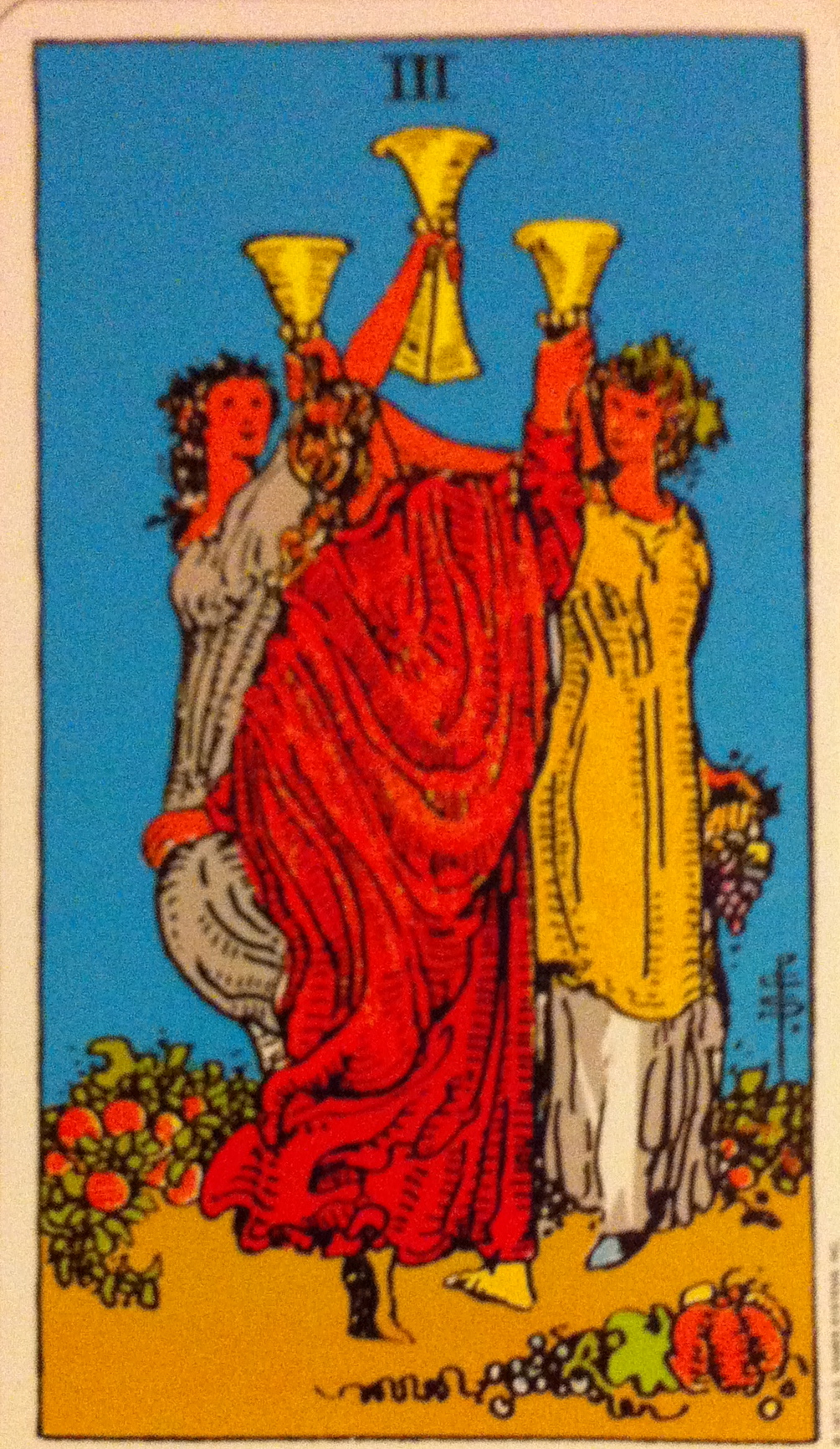
3 of Cups – It looks like a girls’ weekend! Whatever it is, we laugh, celebrate, toast and have a good time. It’s the beginning of a joyous time. We relish each other’s company.


IMG_0820


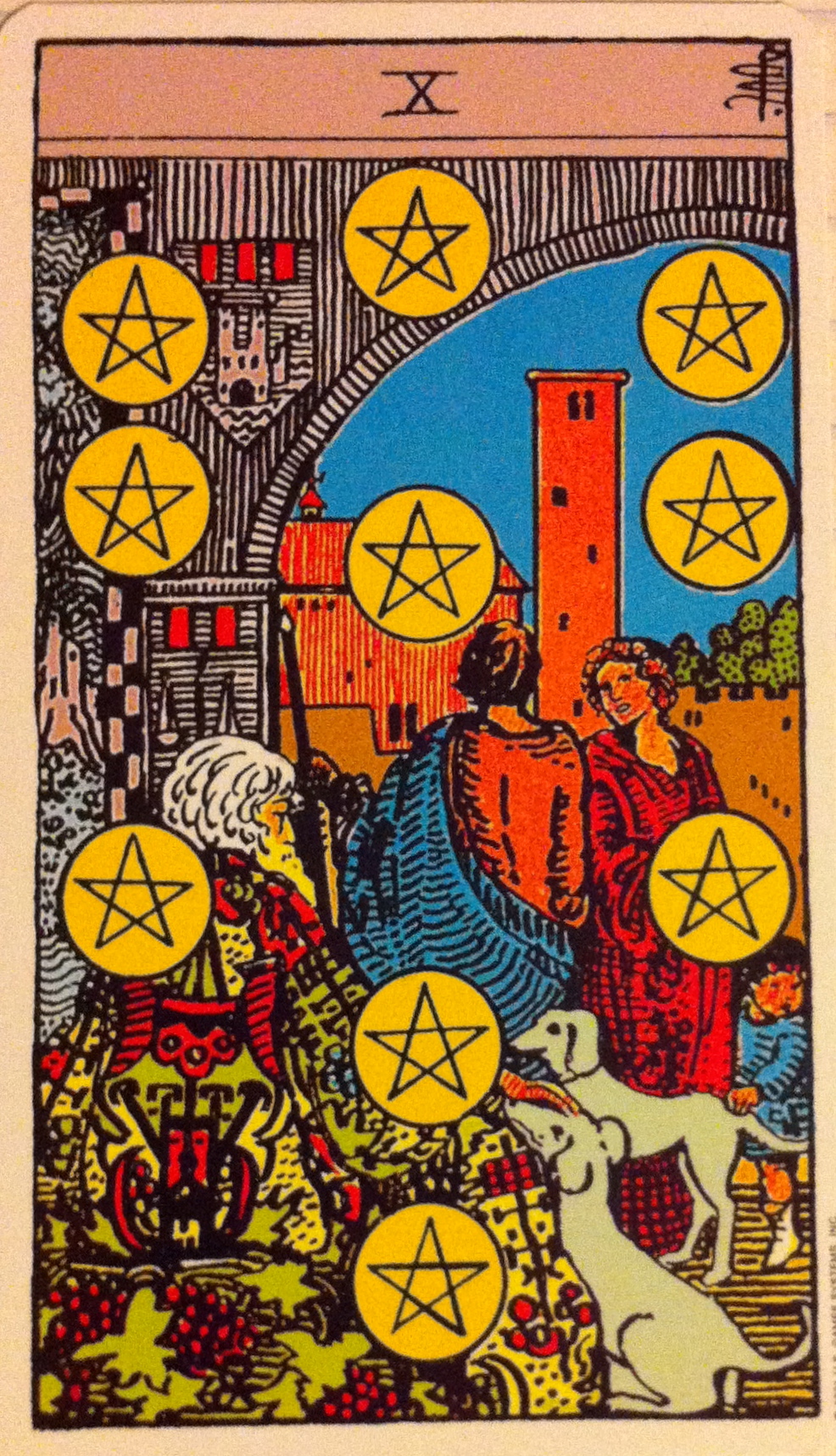
10 of Pentacles – This is the ultimate happy family, with everyone together: 10 is the end of a cycle or the achievement of a goal. The suit of pentacles says that all physical needs are met. This could be a family or a group that is so close that it IS family.  Congratulations!

Self regulation, empathy, and autobiographical listening in the tarot

Today I’d like to delve more into the Emotional Intelligence concept of Empathy. I see this concept vividly in the tarot.

First I’ll add a brief recap of Daniel Goleman’s second cluster of emotional intelligence: self-management or self-regulation. Using the first emotional intelligence cluster,  self-awareness, one decides to change.

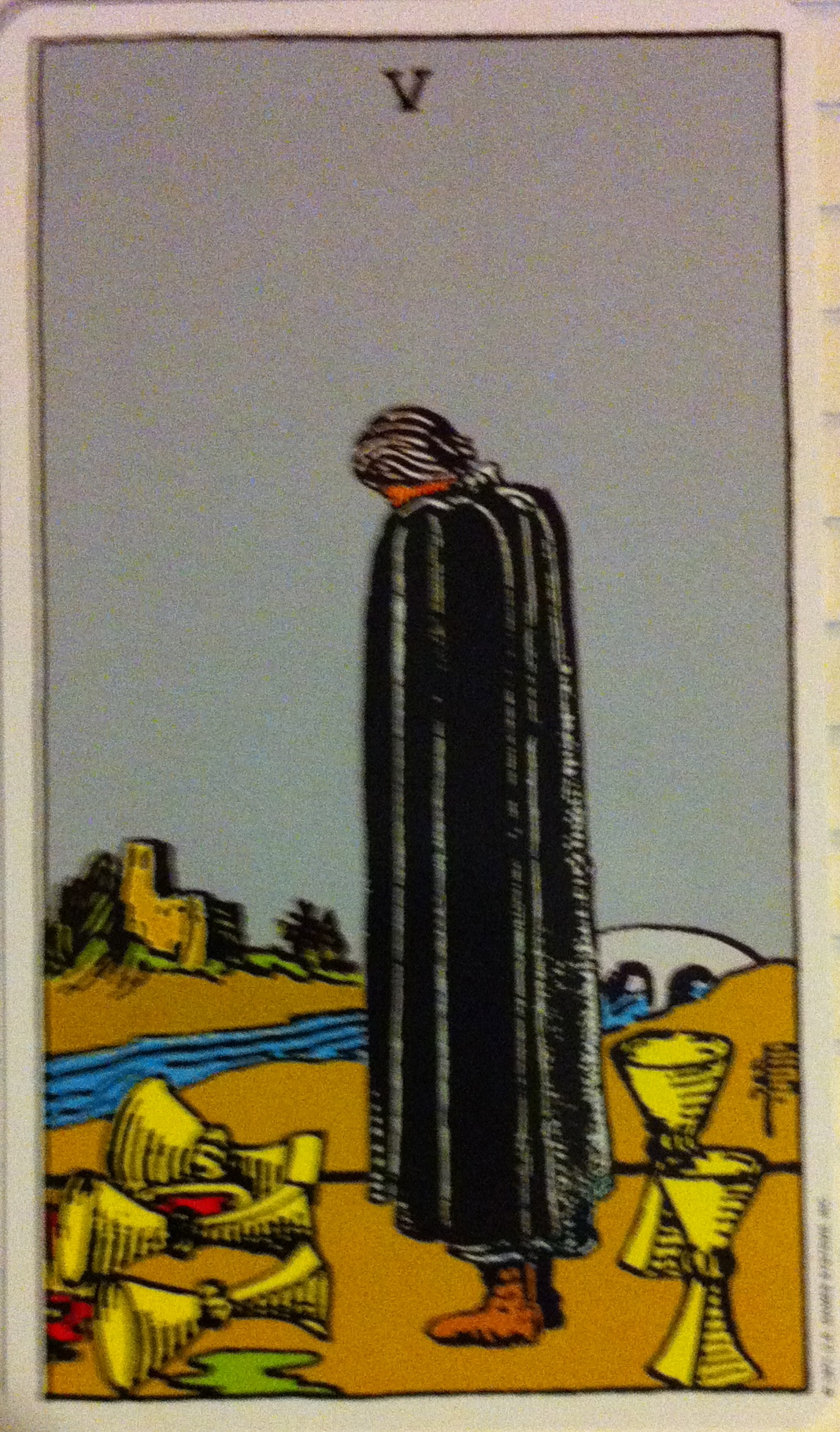
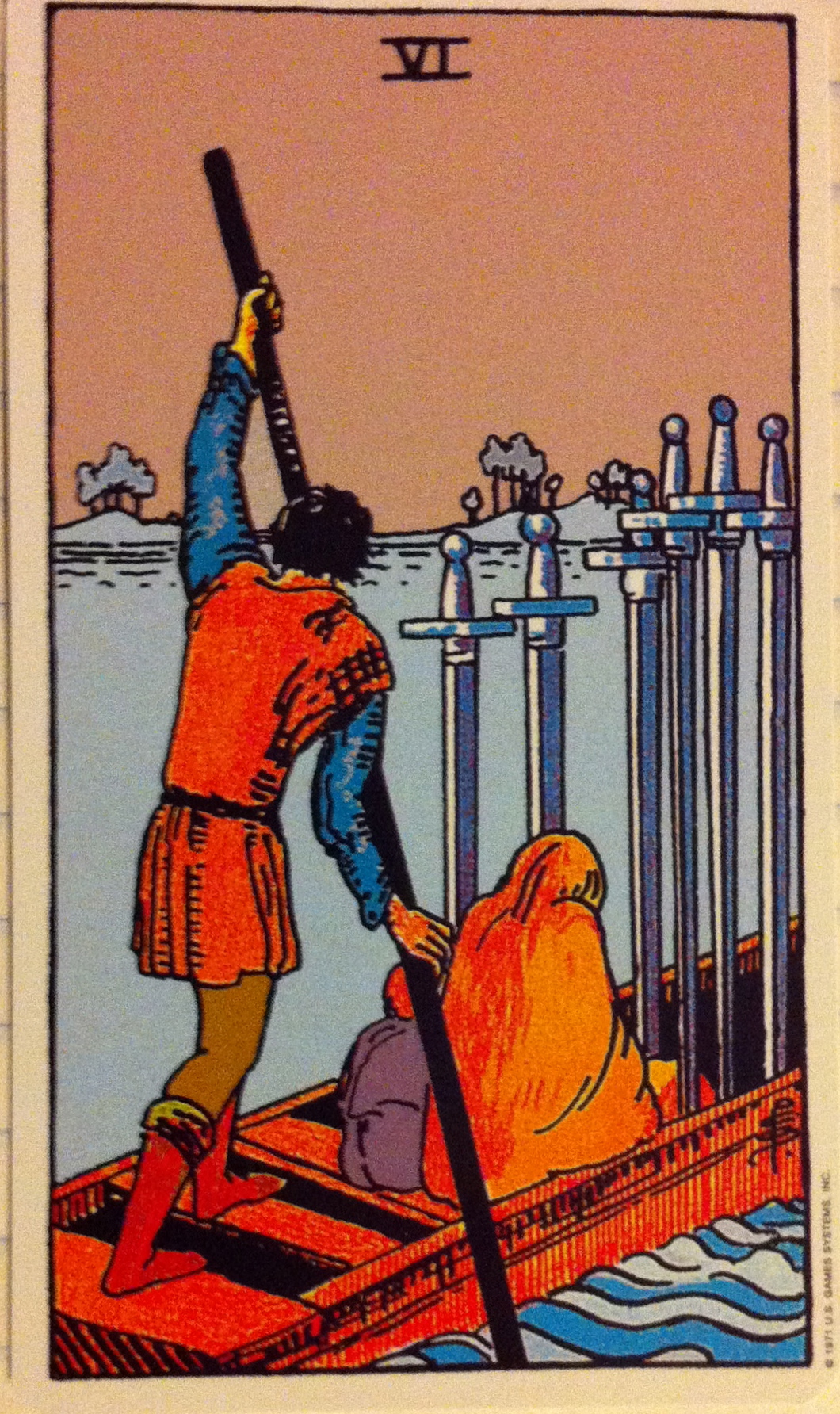
In my September 6, 2014 post I included examples such as The Magician and several minor arcana cards: The V of Cups, The VI of Swords and The VII of Pentacles. These cards all illustrate choice – whether difficult or pleasant.

So now that I’ve decided to make a choice, what can I do to make the most of it? Empathy might be a good place to start.

Empathy and Autobiographical Listening

The concept of Empathy involves getting into the other person’s perspective. This isn’t as easy as it sounds.

Many of us attempt to do this through what Stephen Covey calls “Autobiographical Listening.” I love that term. It’s inserting our own experiences into someone else’s. We often do this when commiserating with a friend. It can be quite appropriate at certain times.

It can also be vastly inappropriate when we insert our own experiences too soon. This shifts the focus to “me” before I have fully heard and understood the other person.

Strength

IMG_0774       IMG_0796

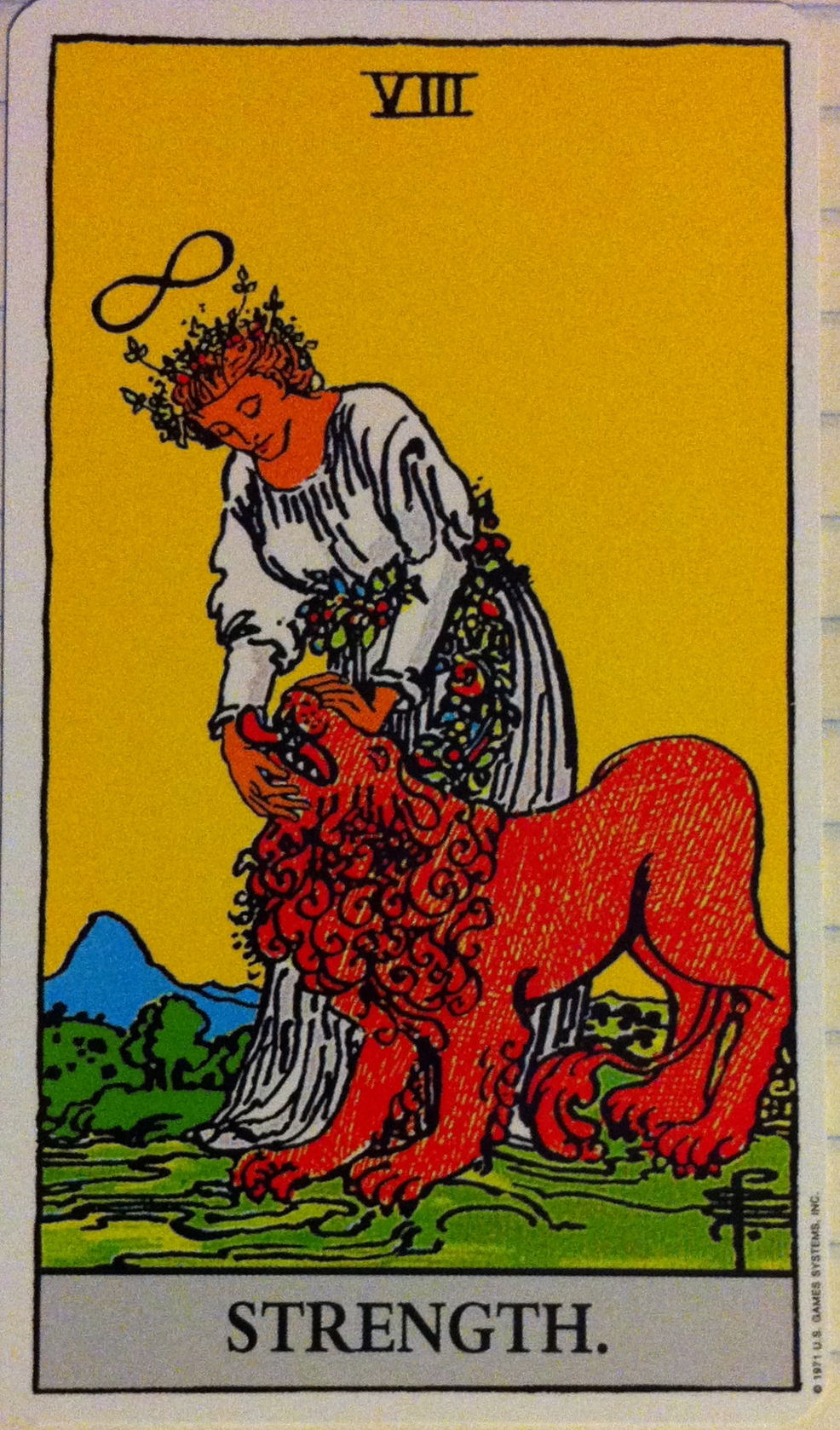
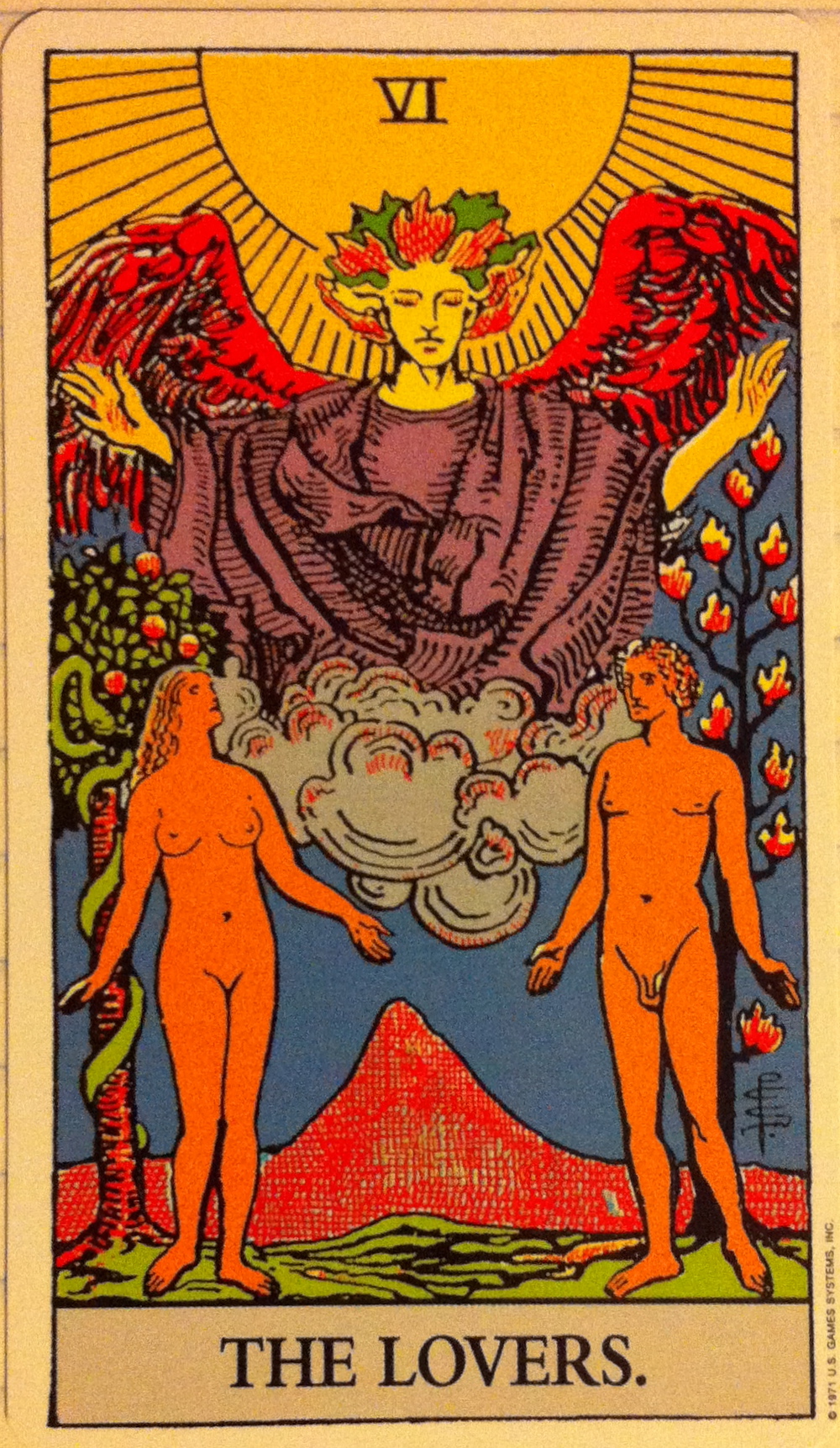
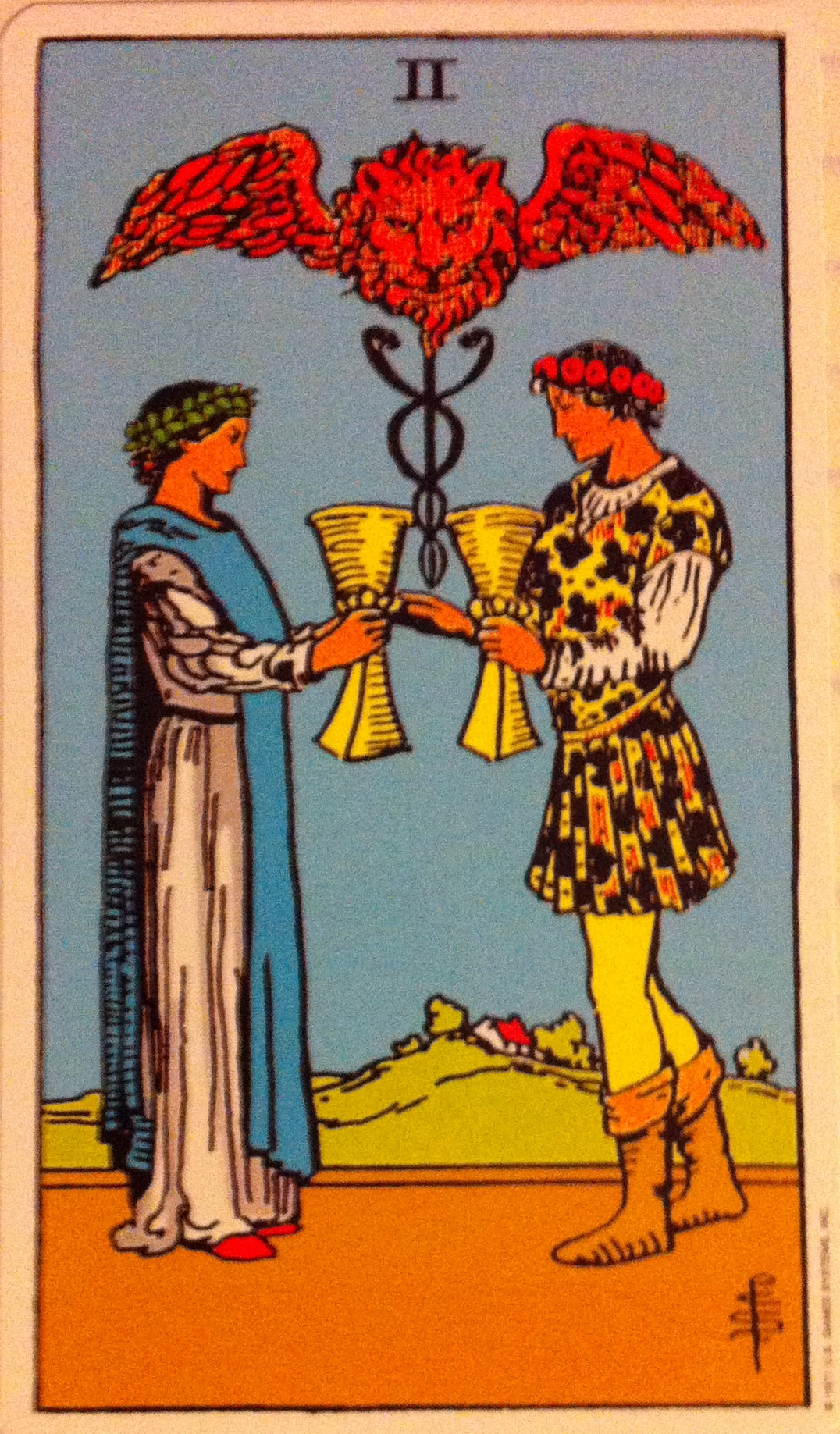
I see the major arcana Strength card as prominent here, along with The Lovers and the minor arcana II of Cups. Each of these cards symbolizes getting into the other’s perspective in order to form a close relationship.

When these cards appear in your reading,  it might be a good idea to examine the depth of your relationships with others.

Tarot’s Connection to Emotional Intelligence

IMG_1343

Who are you, Really? Whooo? (Sorry, I couldn’t resist!)

Daniel Goleman and Emotional Intelligence

I’m a huge fan of Daniel Goleman’s work on emotional and social intelligence. I especially admire the 5 clusters of emotional intelligence that Goleman outlines in his book, Working with Emotional Intelligence. Those 5 clusters are not only sensible, but work in complete synchronicity with Stephen Covey’s 7 Habits of Highly Effective People.

It’s so exciting when you see concepts from different sources coincide with each other in meaning and practice. I’ll explore more about that correlation later. 

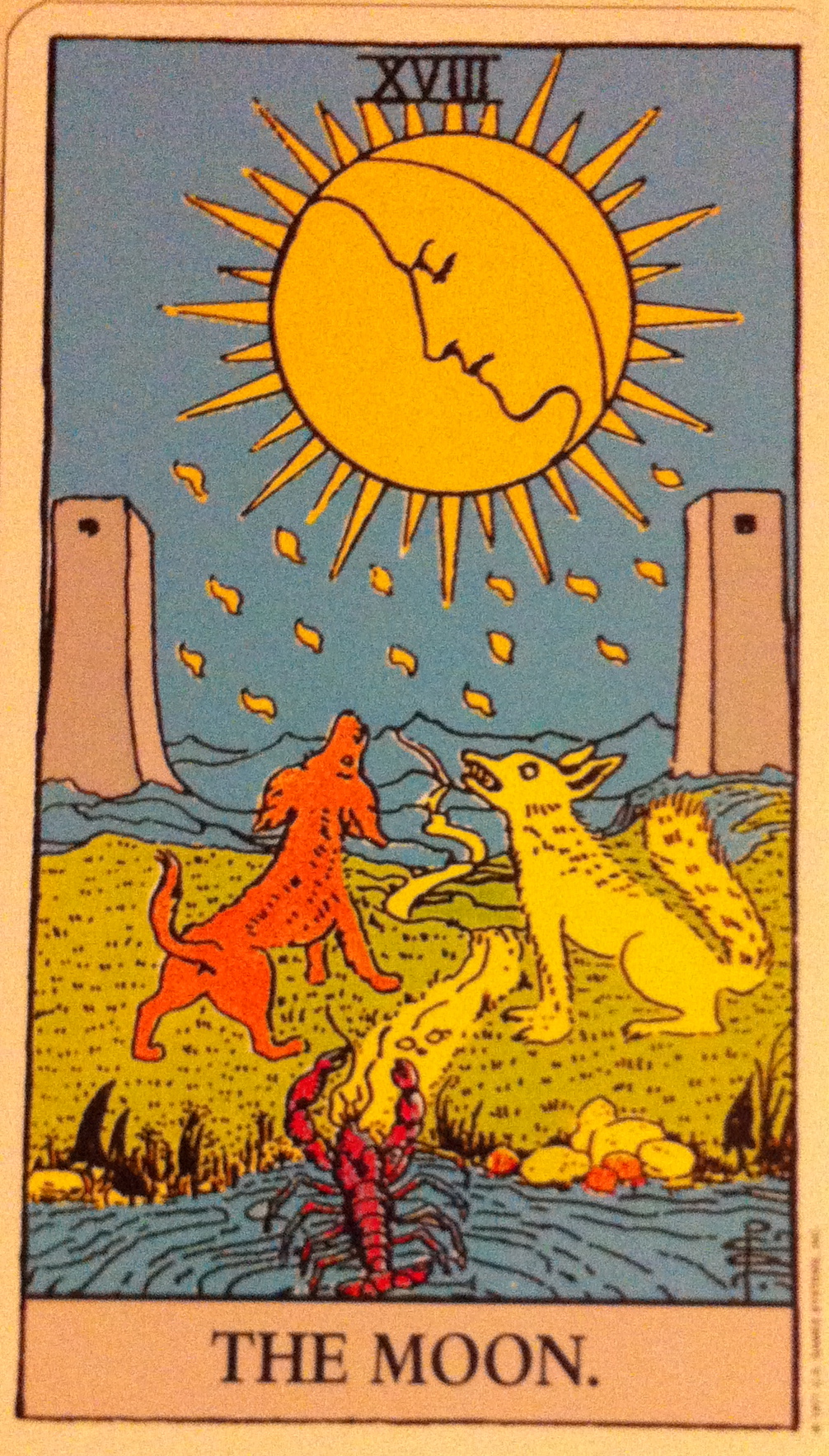
I addressed Daniel Goleman’s first cluster, Self Awareness, in a post back in September, 2014, involving of all cards, The Empress.  I’m sure there are several more cards that could support this concept, including The Hermit, and maybe even The Devil and The Moon.

IMG_0787IMG_0785

As a brief review:

  • Self-awareness is being aware of your emotions, what inspires you, drives you, holds you back, upsets you, pushes your emotional buttons and all kinds of “that.”
  • Self-awareness is looking at yourself through a mirror, seeing yourself as closely as possible to the way others see you.  By the way, this could be very scary and it takes some courage.  It’s also a life-long journey and one that we can be proud of.

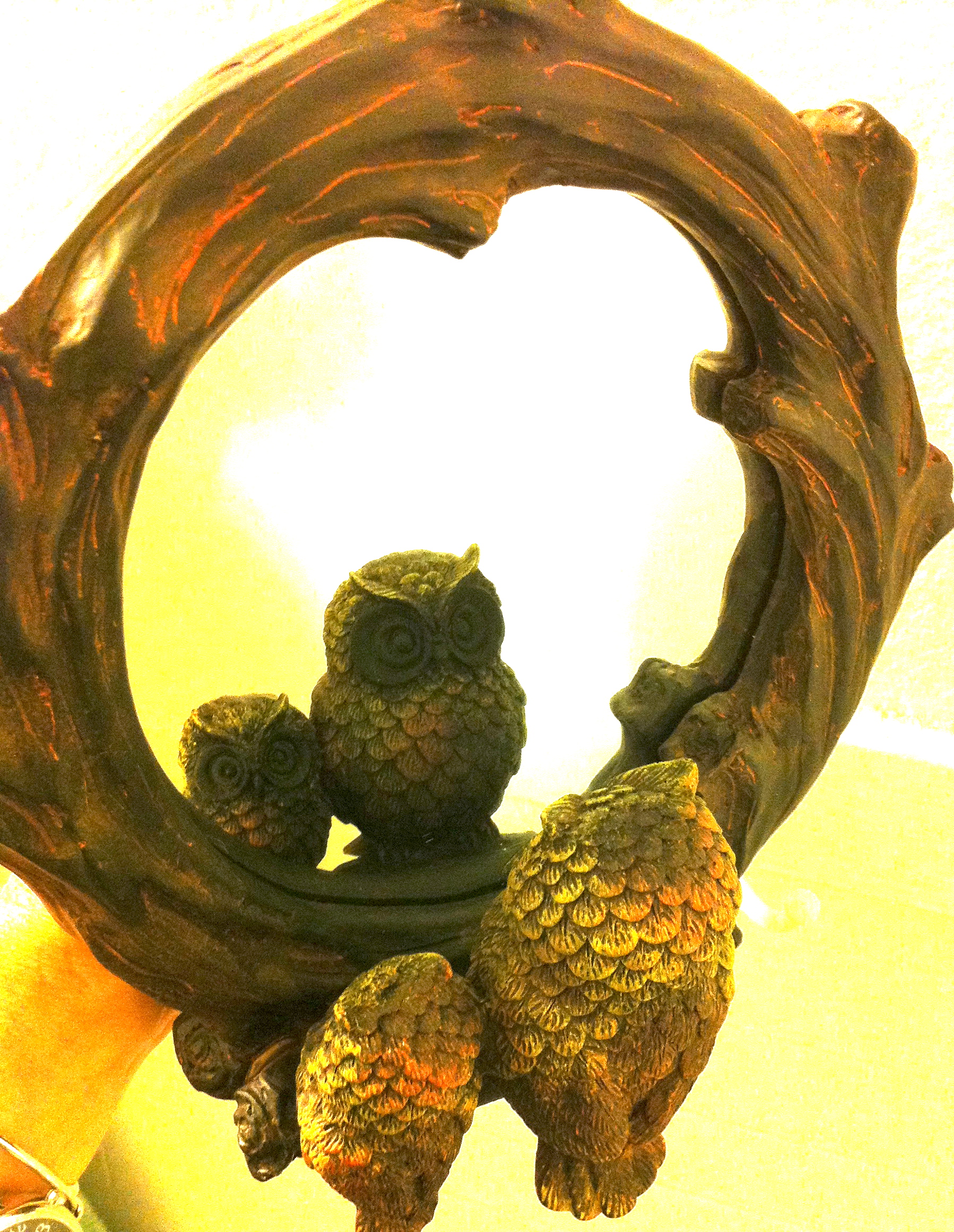
I thought that the little owl mirror was perfect for this concept.   I hope you like it!

Please stay tuned for the next chapter in  my series on Tarot and Emotional-Intelligence” –  Self Regulation and Empathy.

 The VII of Wands in Quotes – Hoi Polloi Tarot 

IMG_1329

“You don’t make progress by standing on the sidelines whimpering and complaining.  You make progress by implementing ideas.”  Shirley Chisholm

“Without struggle there can be no progress.”  Frederick Douglass

“Honest disagreement is often a good sign of progress.”  Mahatma Gandhi

“Get ‘er done” “Just do it” “Do it now” “First things first”

IMG_0846

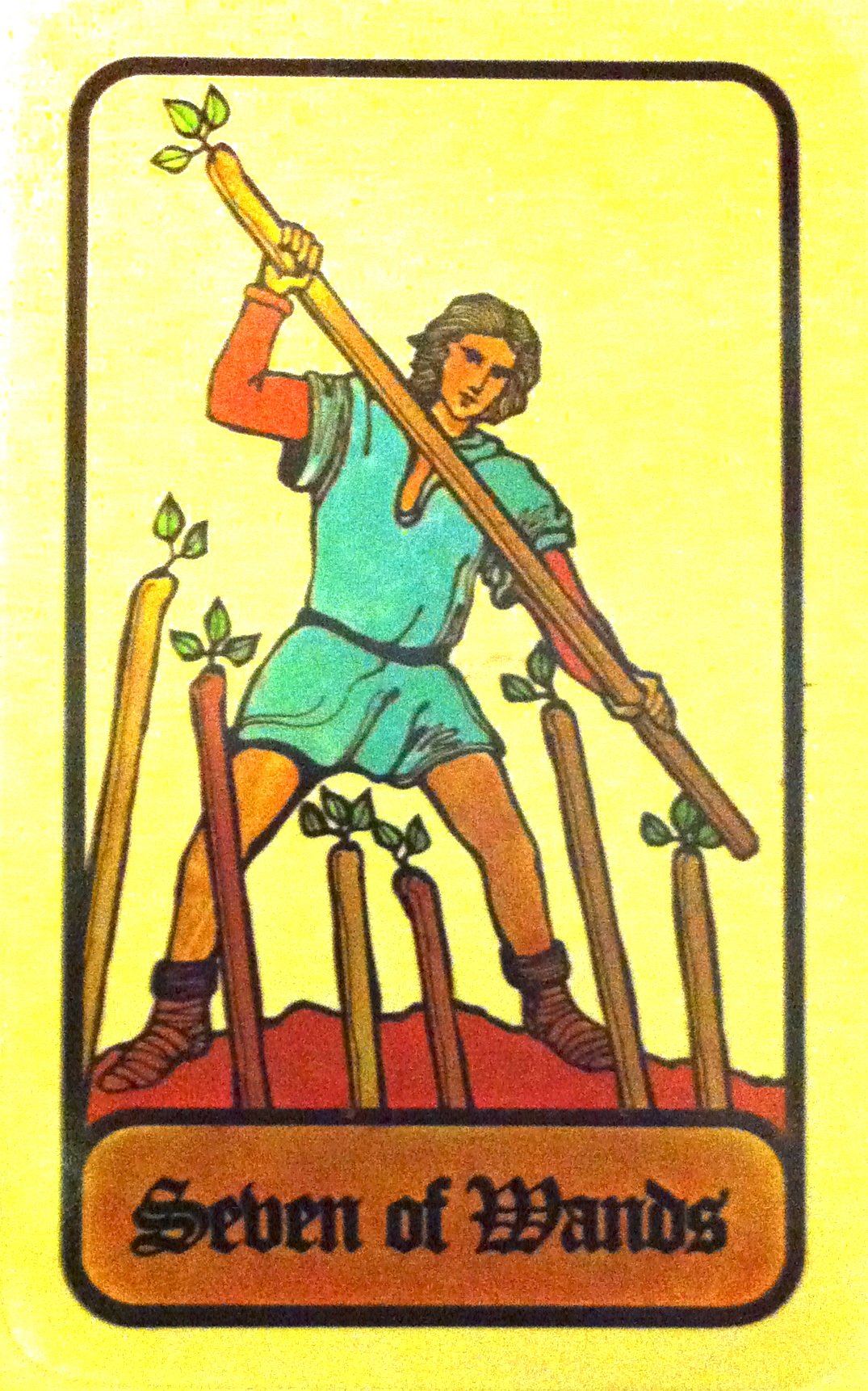
The VII of Wands can be a card of day-to-day prevention. This card could be a reminder to take action before something becomes a bigger issue.

Wands are about action, progress, energy and decisions. Wands fit perfectly into my theory of Practical Action through Visual Approach:  What does this picture say that can inspire my action?

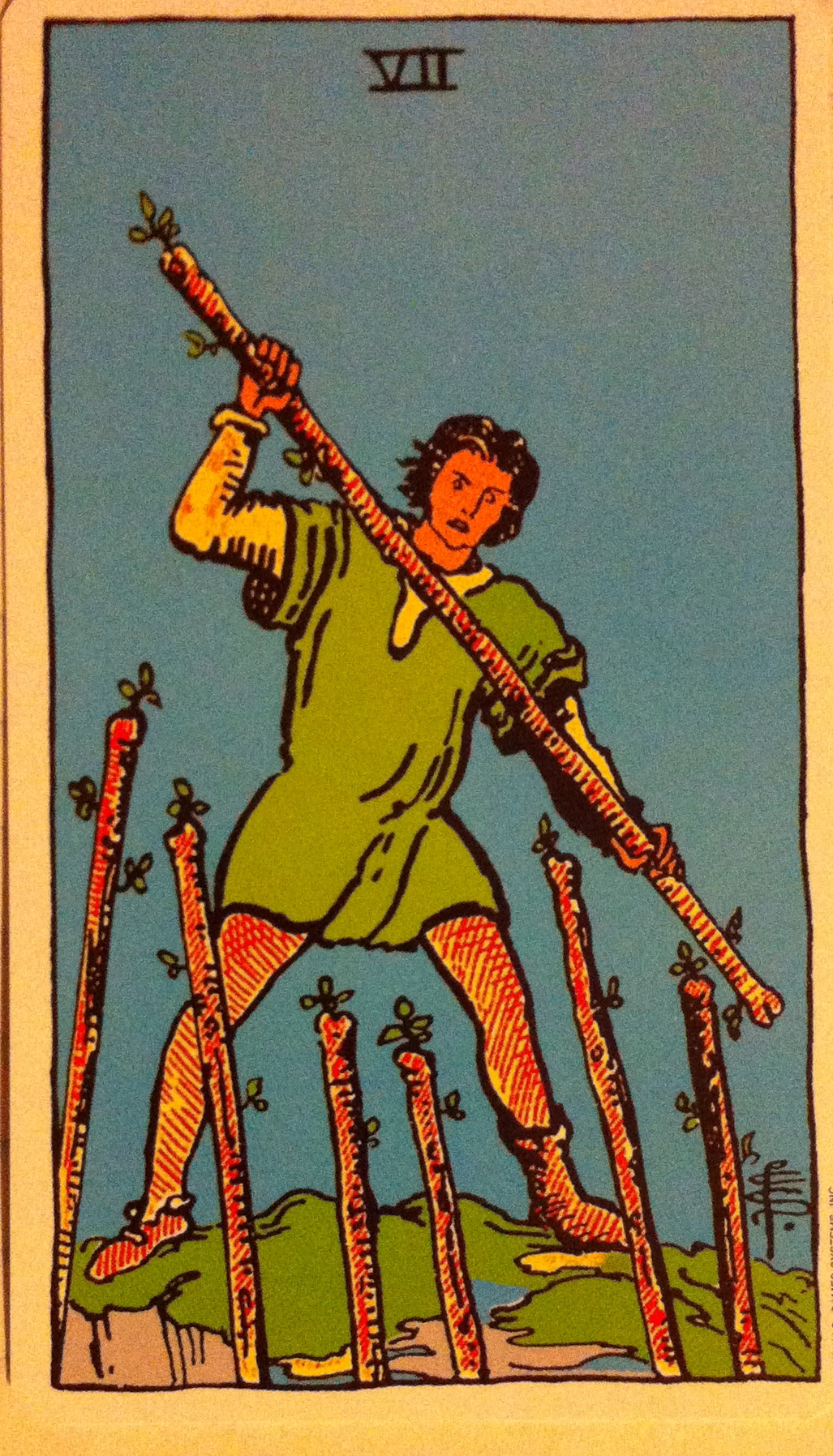
It looks to me as if the person in the picture is working so hard to keep his position safe or to finish his “wands” project, that he forgot to match his shoes.  He looks as if he’s on top of some kind of precipice, with the elevation drop shown in the bottom left of the picture.  He may feel as if he’s in a precarious position right now.

I love thinking of this card when I am procrastinating about something that seems inconvenient or difficult now but will eventually make my life easier. Yes, it may be a struggle;  it may seem risky.  Do it now before the next card in the sequence,  the VIII of Wands, comes flying at you like a crap-storm!

I like the idea of looking at the cards surrounding the VII of Wands to get a clue of what the action might be about. To me, this could be a very positive card because it can help us  progress through something – even a difficult conversation.

When this card comes up, I say, Keep at it.  Don’t give up.  You’re stronger than you think.  You will be ok.  Address this now before you are caught in the thick of it. Even if it’s not resolved now, you’ll be ready for what’s coming.

“Love Conquers All”


Strength


“Love Conquers All”

This saying is dressed up, down, and twisted around in various ways in traditional folk wisdom and in popular self-help material. Two very popular rules are the Golden Rule, and the more current Platinum Rule:

The Golden Rule: “Treat others as you would like to be treated”

The Platinum Rule: “Treat others as they would like to be treated.”

There is also  what I call The Acceptance Rule:

“Accept others as they are” (not as you are, or how you want them to be).  This rule is much more difficult than it appears.

The tarot addresses this very directly in the Strength card.  This card can become more fascinating as you delve into its details.


“Strength”

Card Number VIII or Card Number XI, depending on the deck.

A beautiful woman with flowers in her hair is petting a lion, almost hugging it. A lemniscate or infinity symbol floats above the woman’s head, signifying balance and/or eternity. The lion seems to relish the experience. He is in a position of submission with his tail between his legs.

If we could be with him, we might hear him purring or making happy little noises. The woman has tamed the wild beast with love and acceptance.

Please notice that the woman is wearing a white dress (purity, innocence)  trimmed with red flowers.  They stand in a lush green area, with beautiful blue mountains in the distance, under a bright yellow sky.  Lots of possibilities in the background and the future under a sunny, happy sky.

Using love and acceptance requires immense strength:  the strength to keep your mouth shut, the strength to stop thinking about yourself, the strength to immerse yourself in someone else’s frame of reference.  Just keeping the mouth shut can require a huge amount of strength and self-discipline.

When you pull this card, the message might be:

Tame the beast within you in order to tame the beast near you. Your kindness and love will conquer many situations.  It can open new horizons and relationships for you.

Tarot’s Connection to Emotional Intelligence, Self-Development

The Magician

Daniel Goleman, the writer who boosted the popularity of Emotional Intelligence, writes about Self Management.  I see this concept in Stephen Covey’s The 7 Habits of Highly Effective People – Habit 1: Be Proactive.

Viktor E. Frankl also explained this theory in his book, Man’s Search for Meaning: An Introduction to Logotherapy. Frankl said that we have the ability to choose. Not only that, we can choose our conscious behaviors in any situation.

Daniel Goleman calls it “Self Regulation.” Stephen Covey calls it “Be Proactive” describes the choices we have between stimulus and response. Call it whatever makes sense to you.

It’s exerting control over yourself as you develop your own Self awareness. Self-management enables you to respond with your higher self. It can supersede the automatic reactions that we use for self-preservation. Self-management is using the choice we have over our own actions.

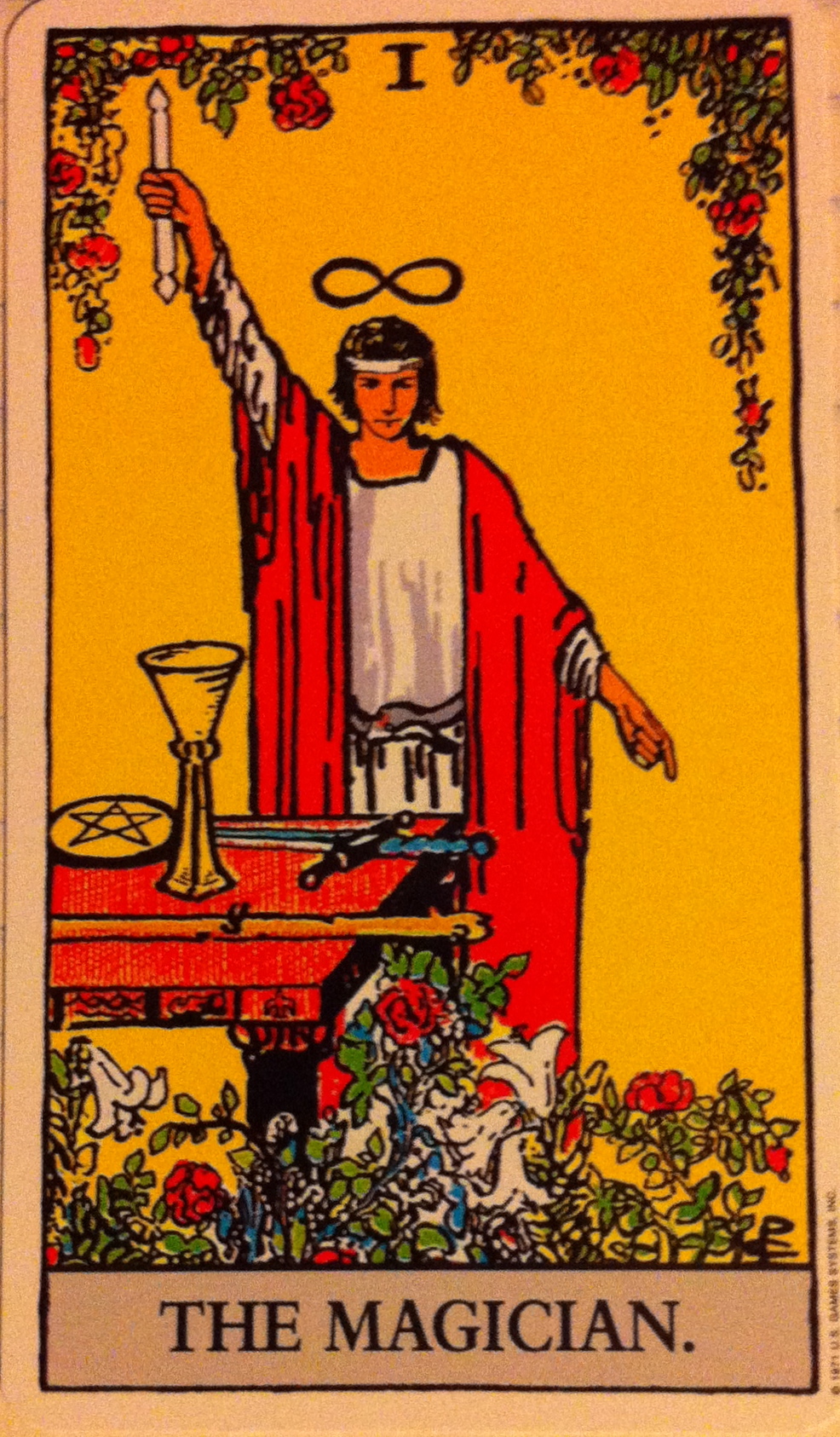
I see this in The Magician, Major Arcana Card II of the Rider Waite deck. He has everything he needs. He is signaling with his gestures, “As above, so below.” His tools are in front of him.  This could be interpreted as mind over matter. Will he use his choices?

IMG_0799      IMG_0830       IMG_0815

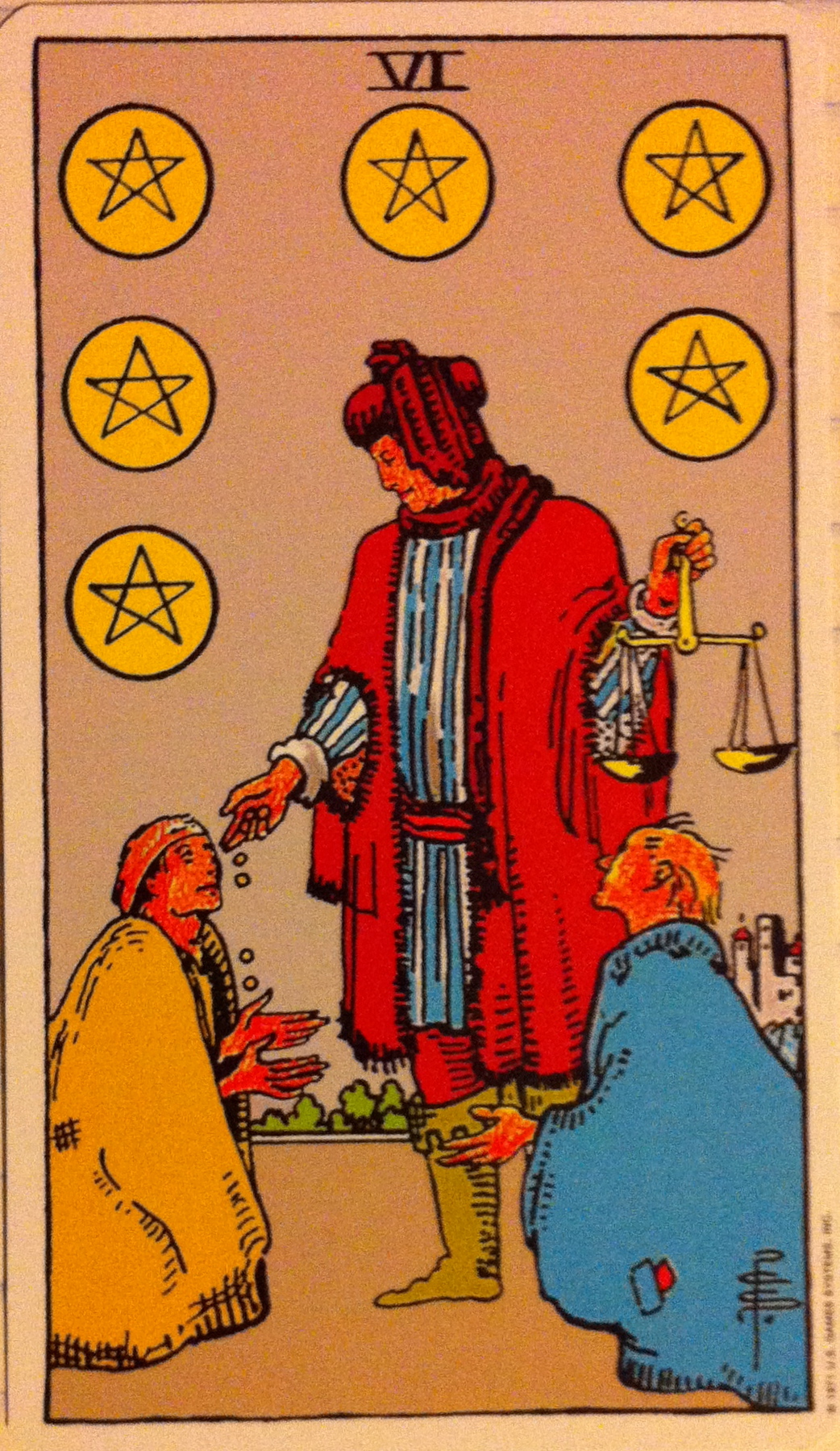
I also see this concept in various minor arcana cards. We exert choices in our daily lives. For example, notice the V of Cups, the VI of Swords and the VI of Pentacles. It appears that each of the characters is making some kind of choice.


 Self-awareness in quotes

“Everyone thinks of changing the world, but no one thinks of changing himself.” Leo Tolstoy

“The unexamined life is not worth living.” Socrates

“Knowing others is wisdom, knowing yourself is enlightenment.” Lao Tzu